The problem
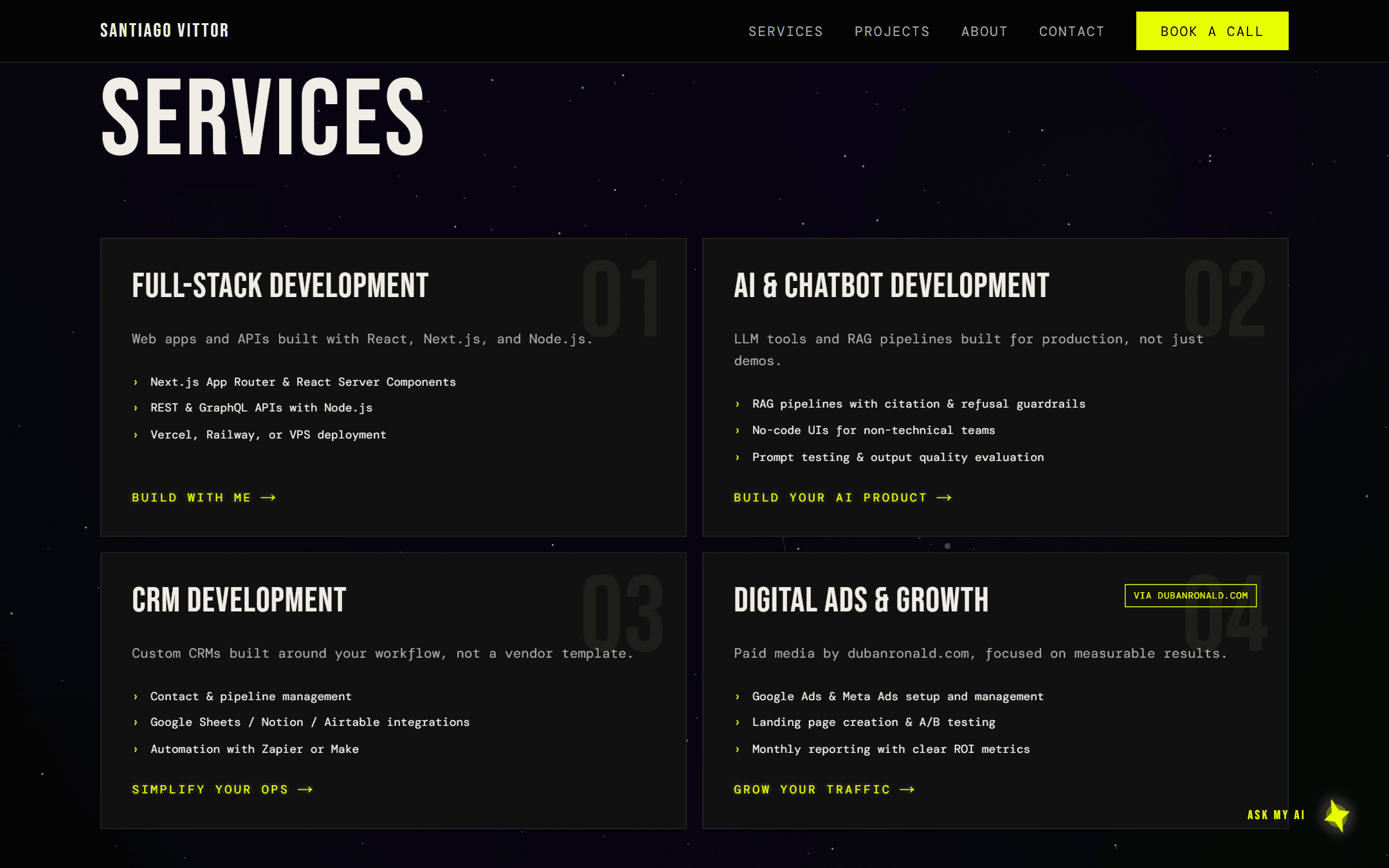
Small businesses do not buy development. They buy a site that brings clients, an assistant that answers at 2am, hours saved on repetitive work. My old services page listed technologies and got silence. It needed to speak in outcomes and route interested people into a conversation instead of a form they abandon.
Key decisions
1Outcomes in the headline, stack in the footnotes
The landing leads with what the client gets. Tech stack appears once, small, near the end. Every section ends with the same question a client would ask next, and answers it. English at the root, Argentine Spanish at /ar: same argument, native register in both.
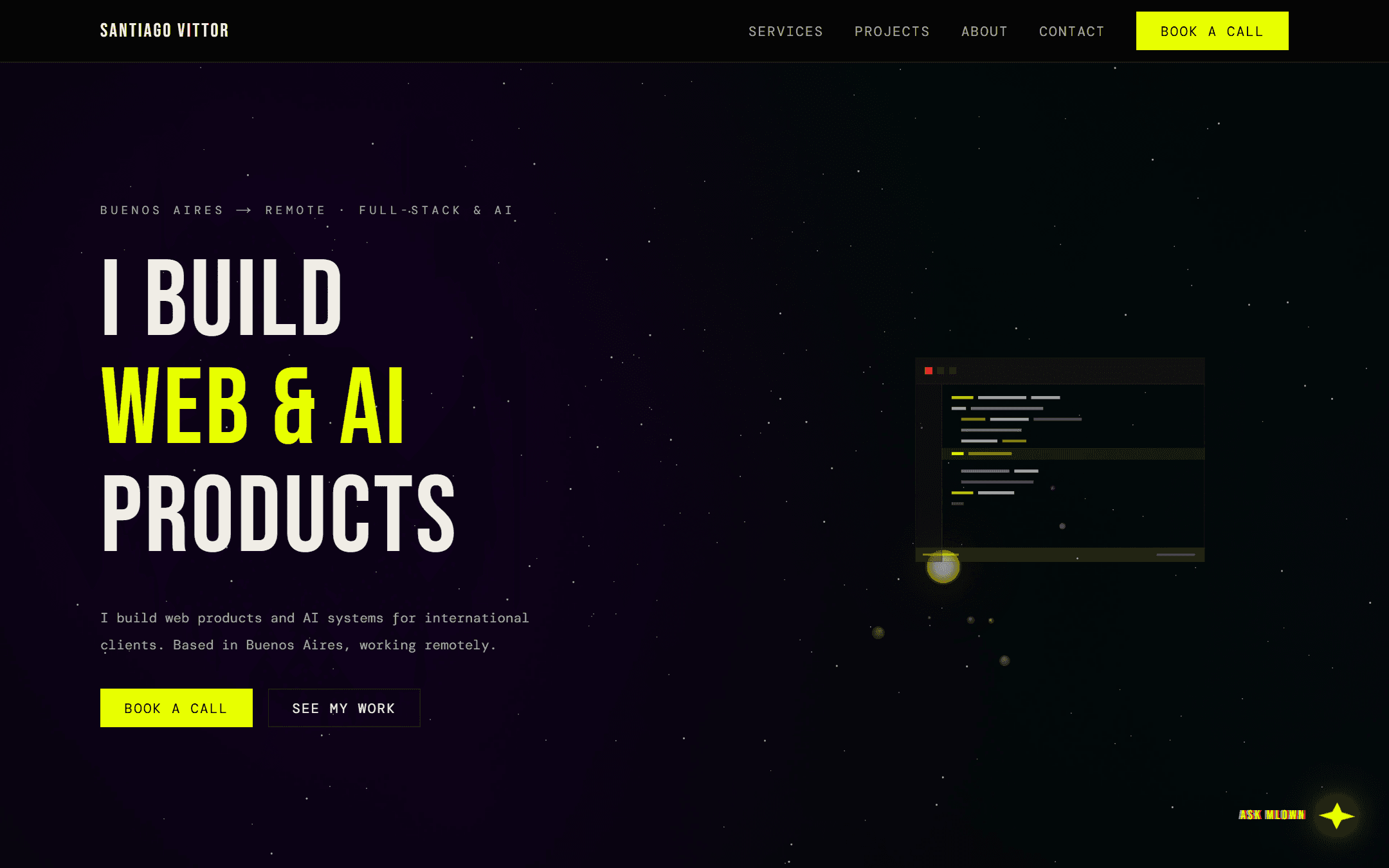
2An AI assistant that does the qualifying
The chat in the corner is the product demo. One streaming endpoint routes three tools: book a call through an inline Cal.com embed, send a contact request through Resend, or hand off to WhatsApp. Language detection drives a bilingual system prompt, injection patterns are matched before the model ever sees a message, and a sliding ten-turn window is trimmed so it never orphans a tool call. A client asking 'can you build a chatbot?' gets the answer by talking to one.
3Every path ends in a conversation
Booking, contact and WhatsApp all open a dialogue, not a ticket. Forms create homework: fill fields, wait, check spam. A WhatsApp link opens the app my clients already use all day, one tap on mobile, and I answer as a person. One call to action per screen, so each viewport has a single next step.
Outcome
The site opens conversations instead of collecting submissions, and it doubles as a live demo: the assistant a visitor talks to is the same kind of build they can buy.